
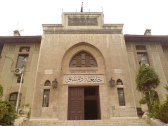
 The history of the higher technical education in Slovakia has started in the year 1762 by the foundation of the Academy of Mining and Forestry in Banská Štiavnica. The establishment of the Academy of Mining and Forestry was important moment in the history of higher technical education, as it was the first educational institution in Slovakia providing technical education at the university level. The Academy of Mining and Forestry has maintained its high level of standard for more than 150 years of its existence and has founded the tradition of excellence of higher technical education in Slovakia.
More than two decades of struggles preceded the establishment and enactment of the first university in Slovakia. The Technical University of M. R. Štefánik was founded in Košice and authorised by the Act No. 170/1937 Coll. of the Czechoslovak National Council, on June 25, 1937.
The Technical University of M. R. Štefánik consisted of three sections:
|
|
1. Section of Construction and Transportation Engineering |
The very first academic year has was opened on the December 5, 1938 at the temporary seat situated in the town of Martin, where the Technical University of M. R. Štefánik was moved swiftly very short after the Munich Treaty and Vienna Verdict, when southern regions of Slovakia, including the town of Košice, were annexed to Hungary.
In February 1939 the Technical University of M.R. Štefánik has been renamed to the Slovak Technical University (SVŠT) and it has been moved to its present seat - to Bratislava. At the same time the Act No. 188 Coll. issued on July 25, 1939 has laid the legal basis for its full development. The Slovak Technical University (SVŠT – Slovenská Vysoká ŠkolaTechnická) has been expanded: three new sections were founded, twelve new institutes were established and all sections were renamed to branches:
|
|
1. Branch of Construction Engineering |
Among the founders and the most outstanding personalities of the Slovak Technical University (SVŠT – Slovenská Vysoká Škola Technická) belong such outstanding personalities as professors:
Juraj Hronec (the first Rector), Karel Krivanec, Jozef Kaucky, Karel Havelka, Dimitrij Andrusov, Peter Danisovic, Emil Bellus, Dionyz Ilkovic, Frantisek, Valentin, Mikulas Gregor, Juraj Gasperik, Frantisek Kozmal, Jozef Cabelka, Jan Gonda, Ľudovit Kneppo, Štefan Schwarz and many others who were building up the university in the harmony with other European technical universities.
The Slovak Technical University (SVŠT - Slovenská Vysoká Škola Technická) has laid the background not only for the classical technical branches and architecture but also for natural sciences, forestry, agriculture, mining and arts, which have been in a run of time separated into independent universities.
The Slovak National Council Decree issued on the April 25, 1946 has waived The Branch of Forestry and Agricultural Engineering and at the same time gave the origin to the foundation of the independent University of Forestry and Agricultural Engineering established in Košice, where it operated until it has been separated in the year 1952. In the academic year 1946/1947, the Institute of Architecture and Civil Engineering was established at the Branch of Civil Engineering. In September 1947, The Institute of Drawing and Painting, specialised to educate future secondary school teachers, was transferred to the Faculty of Pedagogy of the Slovak University (previous name of the Comenius University in Bratislava).
Higher education Act No. 58/1950 Coll. issued on May 18, 1950 has initiated substantial changes, which have influenced all areas of higher education - organisational and managerial structure, educational, scientific and research system. The Act No. 58/1950 Coll. defined, that faculty is the basic body of higher education institutions. The Slovak Technical University branches were consequentially renamed to faculties and since the academic year 1950/1951, there were the following faculties:
|
|
1. Faculty of Construction Engineering |
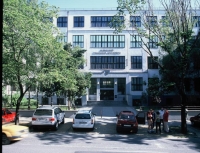 During the '50s, there were realised also other changes at the Slovak Technical University (SVŠT – Slovenská Vysoká Škola Technická). The Faculty of Mechanical and Electrical Engineering has been separated into two independent faculties: the Faculty of Mechanical Engineering and the Faculty of Electrical Engineering.
Faculty of Specialised Sciences ceased to exist and its first institute ”the Institute of Mining” gave origin to the foundation of the new Faculty of Mining Engineering, which was established in the academic year 1951/1952, its second institute ”the Institute of Land Surveying” was transferred and incorporated into the Faculty of Construction Engineering.
The Faculty of Mining Engineering has been separated from the Slovak Technical University (SVŠT – Slovenská Vysoká Škola Technická) in the academic year 1952/1953 and incorporated as a part of the new Technical University in Košice.
The Faculty of Economic Engineering with three institutes - Chemistry, Civil and Mechanical Engineering - was also established in the academic year 1951/1952. However, this faculty ceased to exist in the year 1960 and its institutes were transferred and incorporated into the appropriate faculties.
In the year 1960 also The Faculty of Construction Engineering and the Faculty of Architecture and Construction Engineering were fused into a single one under the new name the Faculty of Civil Engineering.
In the year 1965, the Faculty of Chemical Engineering was renamed to the Faculty of Chemical Technology.
In the year 1976, Architecture studies were separated from the Faculty of Civil Engineering and gave the origin to the foundation of the new Faculty of Architecture.
In January 1, 1986, the Faculty of Machine Technology was established in the town of Trnava (50 km from Bratislava) and in the year 1991 this faculty was renamed to the Faculty of Materials Science and Technology.
In January 1, 1993 the new Faculty of Specialised Studies was founded in Trnava and after two years of its existence it ceased to exist in the year 1995.
In the harmony with the Slovak National Council Act, the Slovak Technical University (SVŠT – Slovenská Vysoká Škola Technická) was renamed to the Slovak University of Technology in Bratislava (Slovenská technická univerzita v Bratislave) on April 1, 1991.
In July 1, 2001 the Faculty of Chemical Technology was renamed to the Faculty of Chemical and Food Technology.
In October 1, 2003 the Faculty of Informatic and Information Technologies was established.
At present the Slovak University of Technology in Bratislava consists of the 7 faculties.
The History Of Damascus university
Damascus University is not only the largest of five universities in the Syrian Arab Republic, but also the oldest for it traces its beginning back to the early twentieth century. The university has just entered the ninth decade of its life and still continues to raise the banner of thought, science and knowledge without hesitance or apathy. The university is keen for Arab generations from all over the Arab world, as well as foreigners, to draw from its light and drink from its trough. And even though Damascus University today is a towering structure integrating all the faculties, it started its long journey with careful, paced steps and then accelerated its steps to achieve the progress and expansion that it boasts of now.
The history of any university is inseparable from the history of its country, for the events and chronicles of the latter play a large role in the history of the former. Thus Syrian’s modern history left its mark on the journey of Damascus University.
Hence, a brief account of the history of its life is necessary for us to comprehend the development of this towering knowledge edifice, whose stages can be summarized as follows:
In 1901, the establishment of the Office of the School of Medicine in Damascus was approved and in 1903 this school, which is the nucleus of the University, opened. The school included branches in medicine and pharmacy, and the language of instruction was Turkish.
In 1913, a Law School opened in Beirut, in which most of the teachers were Arabs and the language of instruction was Arabic. Then this school was transferred to Damascus in 1914 just as the School of Medicine moved to Beirut. Then in the last years of the First World War the Law School returned to Beirut.
Following that the Institute of Medicine and the School of Law opened in Damascus, the former at the beginning of January in 1919 and the latter in September of the same year.
In 1923, the School of Law was named the Institute of Law and this institute was linked together with the Institute of Medicine, the Arab Society, and the Center of Arabic Heritage in organization under the name of the Syrian University. Then the Arab Society and the Center of Arabic Heritage separated from the organization in 1926.
In 1928, the School of Higher Literary Studies was established and it immediately connected its administration with the University. In 1929 it became the School of Letters, which closed in 1935/1936.
The Era of Independence
When the nightmare of the mandate was driven out of Syria and the country was vacated by the foreign armies, education breathed a sigh of relief, and this facility began to receive increased interest and be given careful attention. Soon a new life cropped up in the facility, leading to its growth and development. Its scope was expanded, its area extended and its brilliance increased. The existing educational institutions were strengthened and new faculties and institutes were created. Just as the University was modified drastically to enable it to receive increasing numbers of students and new areas of study were created in order to catch up with scientific and cultural progress.
Then starting in 1946, the University was no longer limited to the Institutes of Medicine and Law, but rather faculties and higher institutions were created in other subjects. Thus, until 1958 when Egypt and Syria united as the United Arab Repulic, the institutes for higher education were as follows:
The Institute of Medicine, the Institute of Law, the Faculty of Science, the Faculty of Letters, the Higher Institute for Teachers, the Faculty of Engineering in Aleppo, the Faculty of Shari’a and the Institute of Commerce.
In 1958, a new law was created to regulate the universities in the northern and southern regions of the United Arab Republic. This led to changing the name of “the Syrian University” to “Damascus University” and to the creation of a second northern university called “the University of Aleppo.” And with the issuance of the regulations of this law in 1959, Damascus University came to be composed of the following faculties: the Faculty of Letters, the Faculty of Law, the Faculty of Commerce, the Faculty of Science, the Faculty of Medicine, the Faculty of Dentistry, the Faculty of Engineering, the Faculty of Education, and the Faculty of Shari’a. The University also preserved its right to grant degrees in graduate studies.
In the era of unity, the number of students and faculty members rose just as cooperation between the universities in the two regions increased. Therefore, they activated between them student and faculty exchanges. After the unity was dissolved in 1961 and in the era of separation following, no remarkable development was made in the university affairs except in the area of regulations, which were adjusted to cope with the situation in the country. University education continued in this state until the March 8th Revolution of 1963. For higher education in Syria, especially after the reform movement in 1970, witnessed care and prosperity as it had never known before. President Hafez al-Assad, leader of the corrective movement, accorded special attention to all sectors of higher education and care that match the large role and high hopes that he held in building a better future for our people and nation. And the luck of Damascus University from all of that was great and included support for the existing faculties, the creation of new departments, the completion of other disciplines, the creation of junior institutes attached to the faculties, and the endeavor to equip these institutions with the latest laboratories and tools. Thus Damascus University came to consist of:
The Faculty of Letters and Humanities, the Faculty of Economics, the Faculty of Education, the Faculty of Law, the Faculty of Agriculture, the Faculty of Shari’a, the Faculty of Pharmacy, the Faculty of Medicine, the Faculty of Dentistry, the Faculty of Science, the Faculty of Fine Arts, the Faculty of Civil Engineering, the Faculty of Architecture, the Faculty of Mechanical and Electrical Engineering, the Higher Institute of Administrative Development. Most of these colleges and institutes received new buildings.
In addition, a number of housing units for students were created in the University City of Basil al-Assad, and there are several others under construction. Also, a separate building rededicated to accommodating nurses working in the university hospitals was built.
This is on top of the fact that special care has been given to graduate studies as seen by the opening of a number of postgraduate diplomas in different disciplines and a diploma of qualification. Also a master’s degree was opened in most disciplines and a PhD in some of them. Besides that, Damascus University has remained committed to the indisputable principle of the use of the Arabic language in teaching in various studies in order to enhance the role of the Arab nation, which it raises. The university has supplied a number of universities in the Arab world with professors on loan, teaching representatives, or visiting lecturers, just as its teachers have published hundreds of textbooks in Arabic and placed them in the hands of students to facilitate their studies.
And after…
This is but a quick overview of the life of Damascus University, which finds that their achievements were without ambition. For it is still looking forward to a brighter and more glamorous future and awaits the day when it can be proud of what the scientific research produced in its midst, whose achievements will be great.
Suggestion for cooperation between the two universities
I'd like to suggest some requirements to establish cooperation:
- Student exchanges for summer training for one or two months.
- Teachers exchanges for training and research purposes.
- Joint supervision of students for master and PHD degrees ( a supervisor from Slovak university and another one from Damascus University)
- Implementation of joint research projects of common interest
- Organization of joint scientific & technical conferences, exhibitions, workshops.
- Exchange of publications between two universities.
- Exchange of syllabuses and curricula.
- Sending some students to continue their study in Slovakia.
- Help each other in some specializations that partner university does not have.
The universities should seek, within their means, necessary funds to promote joint cooperation.
We should do every thing possible to help our education.
To start this cooperation the rector of Damascus university should invite the delegation from Slovak university or the rector of Slovak university should invite the delegation from Damascus university.
This is for beginning and we should think for more cooperation in the future and we should think about the finance this cooperation, this is the most important problem.
Literature:
1. http://www.stuba.sk/new/generate_page.php?page_id=132
2. www.damascusuniversity.edu.sy/en/index.php
3. Nikola Abo Issa. Lecture about cooperation between Damascus University and ISTU. – 2006
4. Scientific Cooperation Agreement between Damascus University in the Syrian Arab Republic and Izhevsk State Technical University in Russia. – 2008.
Návrh na spoluprácu medzi Slovenskou technickou univerzitou a Univerzitou v Damašku
Príspevok má byť podnetom na spoluprácu dvoch veľkých univerzít so sídlom na Slovensku a v Sýrii. Bolo by vhodné, keby sa univerzity spomenuté v príspevku snažili v rámci svojich využiť prostriedky na podporu spoločnej spolupráce. Ak bude vôla spustiť túto spoluprácu, rektor Univerzity v Damašku je pripravený vyzvať delegáciu, resp. rektora príslušnej univerzity na Slovensku na pracovné stretnutie.
Je potrebné myslieť a podporiť spoluprácu pre ďalšiu budúcnosť. Treba však poznamenať, že na takúto spolupráci treba zabezpečiť aj zdroj financií.
TEXT: Dr. Nikola Abo Issa, Damascus university, Damascus, Syria