
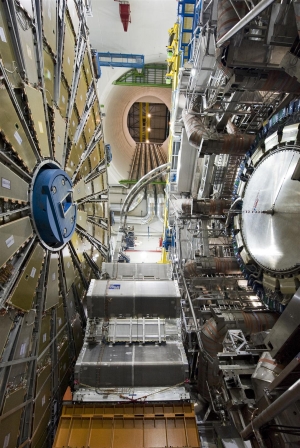
 Many of you know CERN as the place where scientists “play with black holes” and neutrinos are faster than light. This is not entirely the truth, scientists really play around (do science) but, rather than space phenomena, their tools are machines build from cutting edge technologies and of course work pace is at sub-light speed. Engineers, who develop machines like the LHC, must be precise, flexible and in the same time efficient. They have to rely on systems which can be stable and loss of data is very rare.
History
CERN deployed CATIA V5 and SmarTeam supplied by Dassault Systèms as successors of older CAD systems which have been present at CERN from 1983. The decision was made after investigations in year 2003, when both systems deemed to be the most suitable choice due to their out of the box integration and migration path from Euclid pledge by the re-seller.
Present configuration and users of the system
CATIA V5 at CERN, currently on Release 20, Service Pack 6, Hot Fix 18, serves as main and only fully supported CAD tool at CERN. However there are number of other CAD software used as ad-hoc interface solutions, due to the large number of international collaborators using diverse CAD software outside of CERN. CATIA is used by almost all departments at CERN and 200 active users are working with it on daily basis. From Engineering Department to Physics Department, all leverage the software capabilities and are supported by the Engineering Process Support (EPS) Group, which I am part of. The most used workbenches are the Part Design and Assembly Design workbench together with Generative Shape Design and the Drafting workbench. Specialized groups of users make use of the Digitalized Shape Editor and Quick Surface Reconstruction Workbench for reverse engineering and “as build” audit. Other workbenches used are the DMU Kinematics, DMU Fitting and some specialized workbenches. Currently I am in charge of configuration, catalog maintenance and methodology for Equipment & Systems group of workbenches. The priorities are put on the Piping Design, Equipment Arrangement and HVAC Design Workbench.
 Migration to 64-bit systems
The recent migration to release 20 and its compatibility with 64-bit operating system, gave us opportunity to significantly increase the performance of the software while working with large assemblies where we encountered the operating memory limit on 32-bit operating system. In the same time we encountered challenges in the compatibility of the 32-bit CATIA VBA environment, with the new 64-bit environment. As our installation is highly customized we rely on CATVBA scripts in many vital functions. Also the new language Visual Basic .NET downward incompatibility with the legacy Visual Basic 6 in which all scripts were so far written poses problems. Any new developments are done in the VB.NET language and the current significant amount of VB6 scripts has to be manually rewritten.
Availability
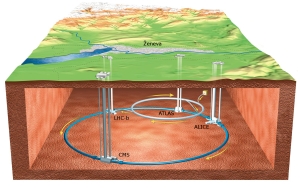
The biggest international CERN collaborations ATLAS and CMS fully relay on the CATIA availability, where every hour counts. During the last three years we managed to ramp up the availability up to 99%. That means that in the end, CATIA - SmarTeam’s availability was affected 2,6 working days per year. Not mentioning that CATIA is available for engineers outside working hours 24 hours 7days a week. We perceive it as a very good performance. This performance has its costs of course. You need committed team of supporters, detailed preparations and extensive testing before deploying every hot fix or service pack. Detailed investigations are also needed to reproduce any software misbehavior and find a solution or workaround. The whole process takes time and consumes significant amount of resources.
Training and challenge of change
We must not forget the smaller, not LHC related, projects like ISOLDE or the LINAC 4 which is the newest linear accelerator build at CERN right now. All of them are using CATIA for detailing, drafting and integration works for their machines. These projects are propelled by strong external collaborations where only minor part of the design work is done by permanent users at CERN. This means that when new user of the system arrives to CERN he must be effective almost instantly because of the limited time spent at CERN. To tackle this challenge support team developed training specifically for users of CERN customized CATIA and SmarTeam installation. The CATIA part of the training material is based on standard Dassault Systèms training material and whole training is given by professional trainers from external training company. Custom made SmarTeam training integrates seamlessly with CATIA training and is taught to be a natural part of the CERN CAD environment. Although SmarTeam user interface (UI) seems not user friendly, users with training and some weeks of work experience with the interface are fully familiarized and effective in the usage. The UI factor also creates problems when we introduce changes to the interface settings or new improvements change the behavior of system. Users need again familiarize with the new behavior and this is producing strong resistance to changes by the users of SmarTeam. This resistance needs to be overcome by abundance of presentations, announcements and help materials such as the on-line FAQ. This creates again drain of resources for the support team of the system.
Challenges in the access level management
 The diverse collaborators base and the UI of SmarTeam create challenges in the access level management of CATIA and SmarTeam. Nevertheless the concurrent work in SmarTeam is successfully controlled by native SmarTeam functionalities like unique “Document Responsibility” together with collaborative work enabled by “Work Teams”. Currently all users of the system have full read and copy access to the database, this means that any user can read and make a copy from any data stored in SmarTeam. As CERN is a fully open institute and all data are by default freely available to global scientist and professional communities, there is little concern of keeping data secret. Challenge lies rather in delivering right data and access level to right persons and in the same time protect the data integrity and do not overwhelm users with system complexity when it is not necessary. The problems arrive mostly when the data leave SmarTeam, but also when users need only restricted “investigation” access to the database. Unfortunately the complexity of the SmarTeam UI inhibits efficient use by occasional and inexperienced users even in basic tasks. Solution to this challenge was reached by developing a publication mechanism called CAD Data Navigator (CDN).
CAD Data Navigator
CDN creates one-way bridge between SmarTeam concurrent data management and the occasional user by allowing the designer to publish data to the CDN web interface powered by the CERN developed product lifecycle management system called Engineering Data Management System (EDMS). CDN makes use of the 3DVIA Enterprise Sync to generate .smg and possibly pdf and step files, which are published in CDN on demand. The models published in CDN can be downloaded and viewed by the 3DVIA Composer Player free of charge by any CDN user, also outside CERN. The straightforward UI of 3DVIA Composer Player together with the available rich functionality make it easy for occasional users to access and investigate the models published from the SmarTeam database without deeper involvement with the viewer software.
Conclusion
The CAD system compatibility with the 64-bits operating system brought us the advantage of fluent work with large and resource hungry products and was the major motivation towards the migration. SmarTeam fulfills its duty with good performance. On the other hand its much needed customizations are draining lot of resources mainly because SmarTeam is not adapted to the current new information technologies. We managed to interface the new 3DVIA line of Dassault Systèms products with the legacy PDM system SmarTeam and enhanced some of its weak points. Users find the 3DVIA Composer product line very appealing and are calling for their wider use.
TEXT/PHOTO Michal Mlynarčík